Brazilian dating culture can look more intimate than it is. People stand close, greet with cheek kisses, and show affection in places where a visitor might expect more restraint. None of that tells you whether somebody wants one evening, regular dates, or a relationship.
The invitation gives you a better answer. A kiss in a crowded street can carry less weight than being included in a quiet Sunday lunch. A table at a boteco, a casual neighborhood bar, may be an easy first date or two friends seeing where the night goes. A request to meet a parent often means that the relationship has entered ordinary life.
This guide reads those invitations from the inside out. For the wider picture on cities, relationship labels, and the foreigner experience, use our guide to dating in Brazil. Here, the point is narrower: how to tell what a Brazilian date is asking of you before you attach the wrong meaning to it.

Sunday lunch carries more weight than a public kiss
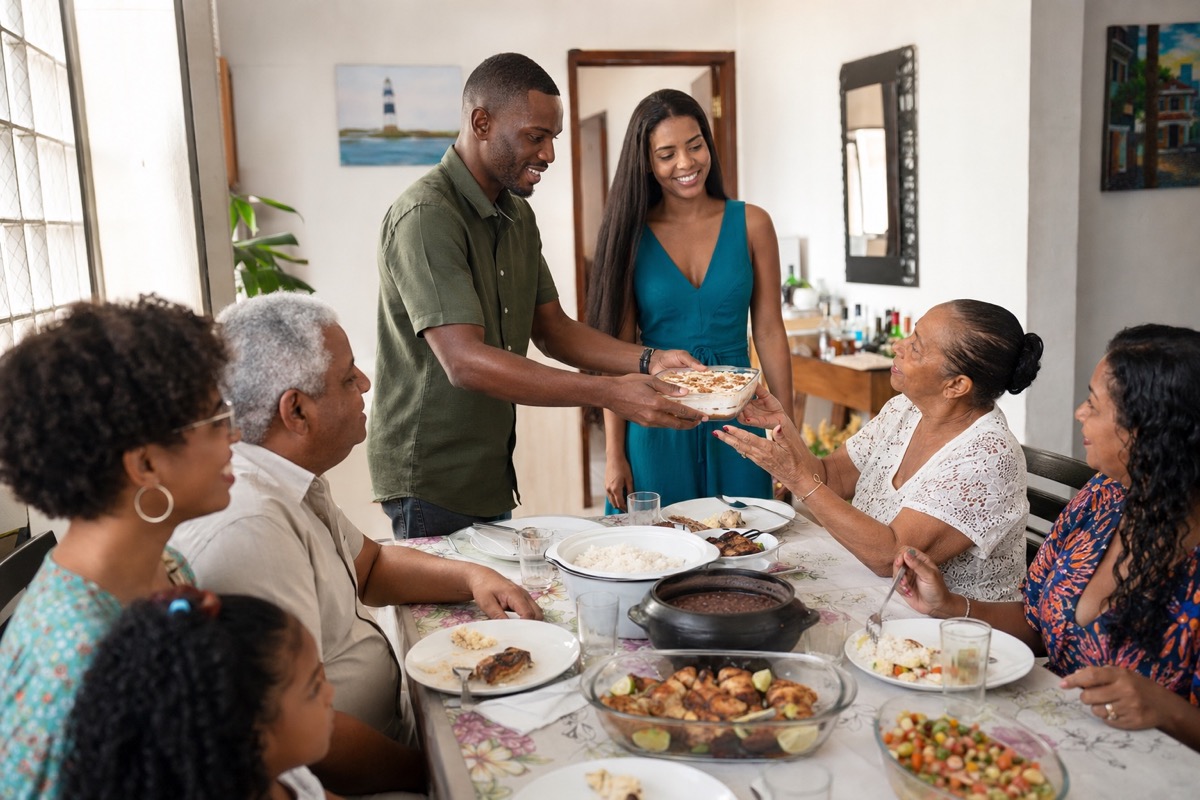
Brazilian family life often extends well beyond parents and children. Grandparents, cousins, godparents, partners, and family friends may all move through the same weekend meal. That makes an invitation home useful evidence. Your date is letting you see the people and routines that will still exist after the exciting first weeks.
Do not treat the first introduction as an engagement announcement. Some Brazilians bring friends and new partners home with little ceremony, especially when relatives live nearby or the household hosts a stream of visitors. Listen to how your date introduces and includes you. Being presented as a partner, asked about future plans, and invited back to the next gathering carries more weight than meeting a mother who happened to be in the kitchen.
Arrive ready to join the table
Greet everyone who is present. In many homes, that means a handshake or hug and a cheek kiss, though the number of cheek kisses changes by region and by person. Follow your host’s lead instead of trying to memorize a national rule.
Bring something shareable if the meal is planned, such as dessert, fruit, or drinks. Ask before assuming alcohol is welcome. Learn enough Portuguese to introduce yourself, ask a simple question, and thank the person who cooked. You need no polished speech. Looking at your partner for a translation after every sentence, however, leaves them working while everyone else eats.
A family introduction stops short of a wedding promise
Family approval can matter without dictating the couple’s future. Brazil’s 2022 Census found that couples with children are no longer the majority of family arrangements, and consensual unions have become more common while civil-and-religious marriages have declined. One couple may want a church wedding and children. Another may build a shared home without either.
Ask what meeting family means to this person. If you are only in Brazil for a month, say so before a warm welcome turns into an implied long-distance plan. If you are dating with marriage in mind, ask about that too. The respectful move is to match the honesty of the invitation.
Brazilian dating culture changes between dinner, neighborhood bars, and Carnival
Brazil does not have one standard first-date format. The setting changes how much planning, privacy, and romantic intent the invitation carries. Read the place before you read the chemistry.
Dinner arrives with clearer intent
A reservation or a specific dinner plan tends to read as a date. Dress as though the choice mattered, arrive close to the agreed time, and confirm the plan earlier that day. In São Paulo, distance and traffic can turn a casual suggestion into a serious commute. In Rio, crossing the city at rush hour can do the same. Pick a place that does not make one person spend two hours proving interest before the drinks arrive.
Dinner still does not promise exclusivity. Brazilian couples distinguish between a casual or undefined connection and an official namoro, or committed relationship. Affection can grow before the label does. If you need to know whether you are both seeing other people, ask instead of treating an expensive meal as the answer.
A neighborhood bar leaves the evening room to breathe
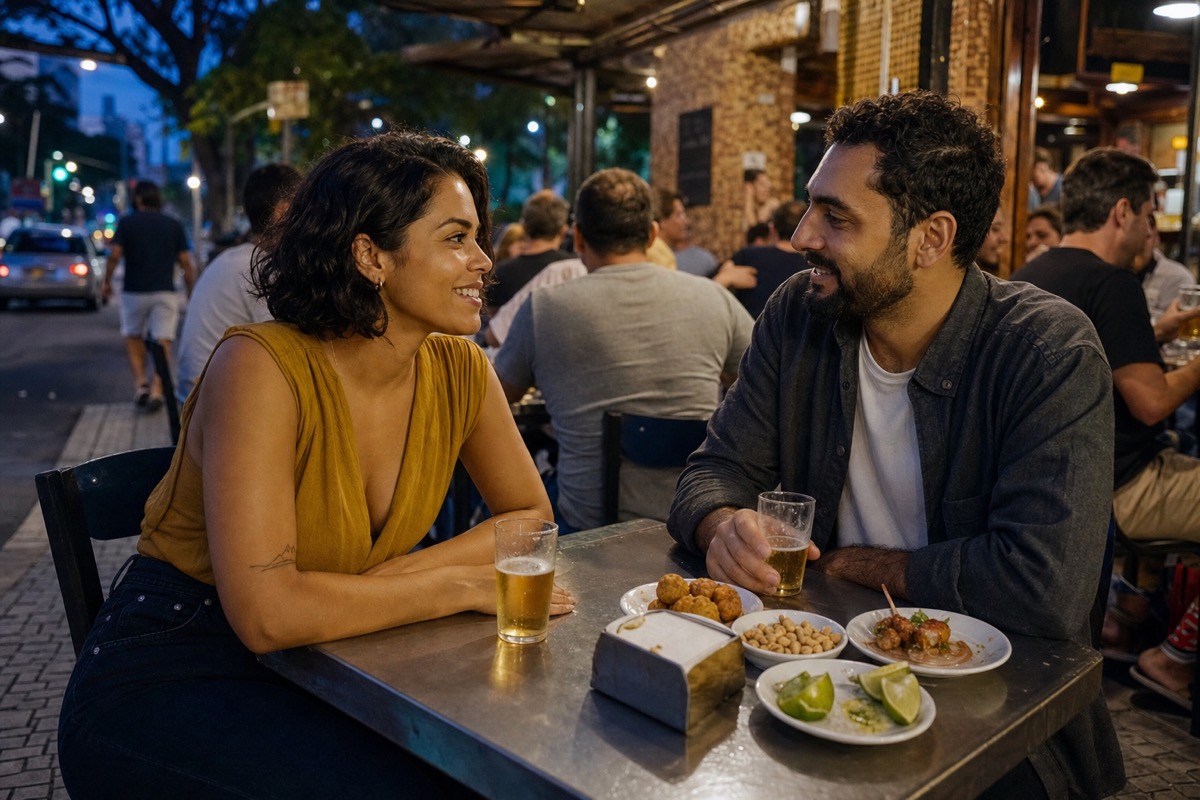
A neighborhood bar is less formal: cold beer or a soft drink, shared snacks, tables close together, and no pressure to order three courses. It works well for a first meeting because either person can leave after one round or stay when the conversation is good.
That looseness is the point. “Let’s get a beer” can be a definite date, a friend plan with flirtation, or a low-stakes meeting after an app chat. Look for the details around the invitation. Did they choose a day and place? Are they making time for you alone? Do they follow up afterward? A lively two hours without another plan can still have been a good evening rather than the start of a relationship.
A Carnival street party is public and casual by design
At Carnival, a bloco is a street party where thousands of people dance, drink, flirt, and kiss. Going together can be fun, but the crowd makes it a poor place to infer commitment. Agree on whether you are arriving as a couple, meeting friends, or simply staying near each other for safety.
Brazil’s federal consent protocol covers bars, nightclubs, and large events. Its rule is also the useful dating rule: a festive setting does not soften a no. Ask before a kiss, accept the answer once, and do not turn a public invitation into private access.
Splitting the bill keeps money practical
The person who made the invitation may offer to pay, and an old heterosexual script still puts that offer on the man more often. Younger urban couples also split the bill, alternate, or let one person cover this date and the other take the next.
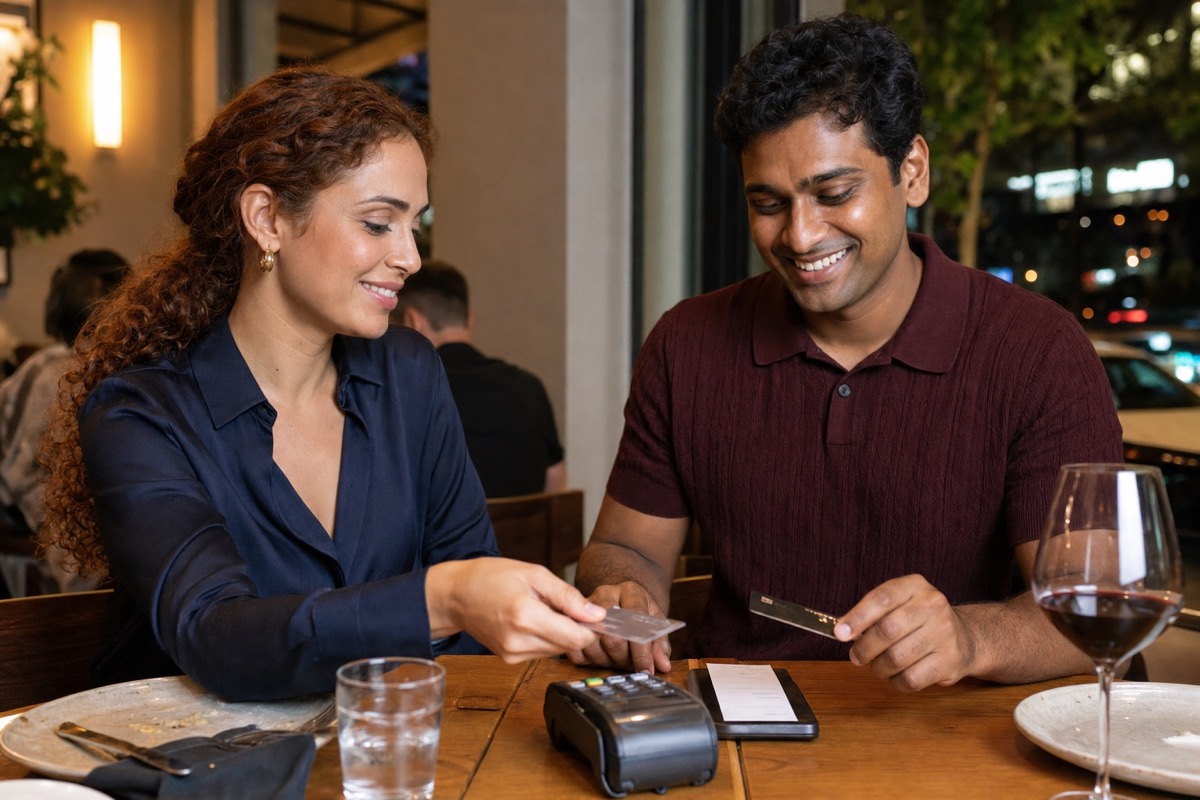
Make one clear offer, then make the payment easy. “I invited you, so this one is mine” is generous. Arguing after your date says they want to split turns courtesy into control. Reaching for a card does not prove a lack of romantic interest, just as accepting dinner does not create a debt.
Match the plan to both lives
Brazil’s income gaps are visible, and two people can have different ideas of what counts as an ordinary night out. Choose a place your date could afford to return to. A luxury room can force them to keep up or feel sponsored. A good boteco, park walk, museum afternoon, or beachside coconut can produce a better conversation than a rooftop chosen for its price.
Money questions become more serious when a holiday romance starts turning into regular dating. Do not make rent, travel, or family support part of an undefined connection. If one person earns far more, talk about what feels fair before generosity becomes an expectation neither of you named.
Brazilian warmth is loud; follow-through is quiet
Brazilians often use less personal space than visitors from more reserved cultures. Friends touch an arm while talking, greet with affection, and bring new people into a conversation without ceremony. That warmth makes a date easier. It can also make ordinary friendliness look like a private signal.
Read interest after the greeting
Do not score interest by cheek kisses, compliments, or how close somebody stands. Watch what happens after the social moment. They answer with substance, accept a specific plan, suggest another day when busy, and make room for you in a real week. Interest has follow-through.
Regional habits differ, and Brazil is too large for a single body-language rule. A greeting in São Paulo may not look like one in Rio, Salvador, Porto Alegre, or a smaller interior city. Let the person in front of you set the distance. The safest reading is also the least dramatic one: friendliness is friendliness until both people make the date clear.
Consistency matters more when you are the foreigner
Foreign visitors often receive curiosity at first. Curiosity is not a promise either. Put your actual travel dates in your profile, keep the plans you make, and learn enough Portuguese to handle an ordinary conversation without making your date translate their personality.
If you want to meet before arrival, LatinFlare lets you browse Brazil through Explore, message directly, and set a city early with Globalist. Our Brazil dating-app guide compares that approach with the main swipe apps. Whichever app you use, keep the first meeting public, arrange your own ride, and tell a friend where you are going.
Then judge the connection by the next invitation. A loud night can be casual. A cheap beer can become a real date. A quiet meal with family can expose more intention than a week of public affection. Brazilian dating culture is easier to read once you stop measuring how romantic a moment looks and ask where this person is making room for you.