Dating in Brazil trips up most foreigners in the same spot, and it isn’t the language or the distance. The country runs a relationship stage that English has no word for, a space between a first kiss and a couple that carries its own verb and its own rules. Show up treating it like the dating you know from home, and you’ll misread the person across from you inside a week.
So this guide skips the postcard. It starts with why Brazilians are so openly physical about all of this, what shifts once you’re the obvious gringo, how money and class actually read on a date, and then the two words that run the whole thing: “ficar” and “namorar.”

Why dating in Brazil gets physical fast
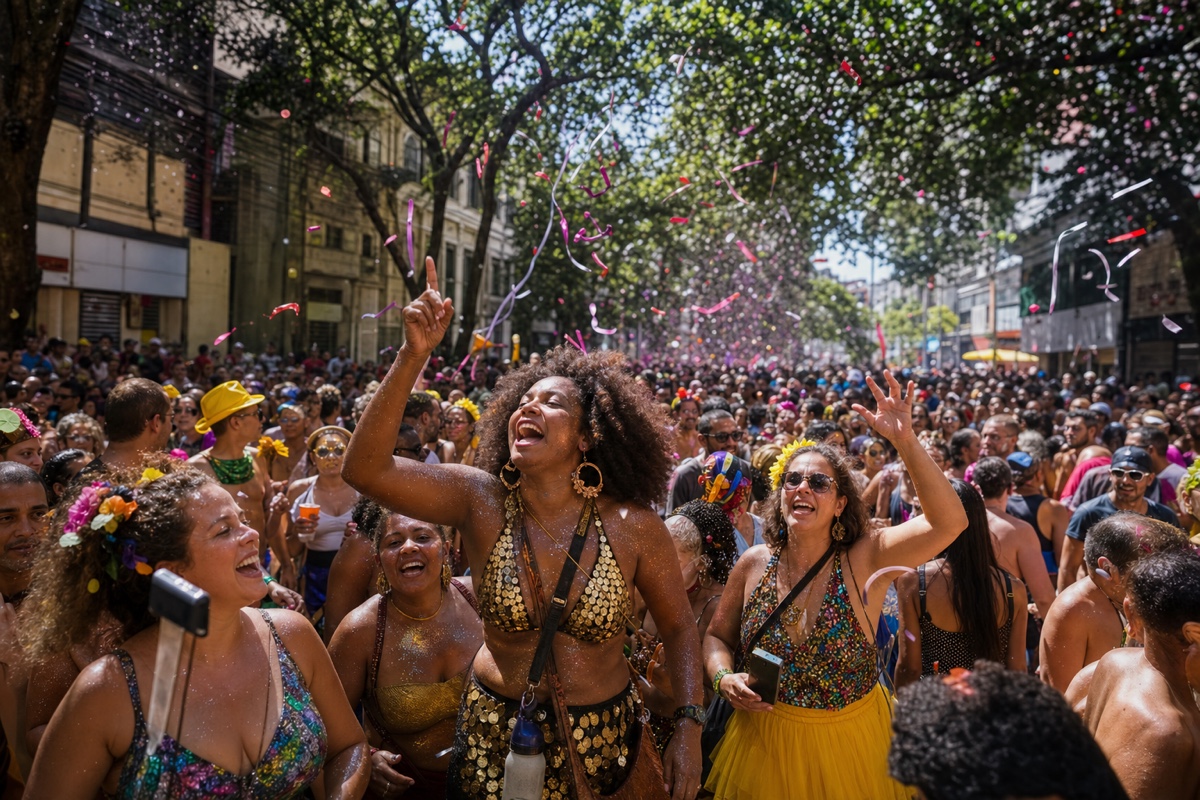
Couples kiss on the beach, at the bus stop, in the supermarket line, and nobody looks twice. That openness isn’t random, and reading it correctly saves you from a lot of wrong conclusions. A big share of Brazilian social life happens in public and half-dressed, because on the coast the beach is a daily habit rather than a special outing. Once a year Carnaval hands the whole country a permission slip to flirt and kiss strangers in the street, and the blocos, the roving street parties, are where a lot of first kisses happen. Add decades of telenovela romance as the national background music and a Catholicism that runs deep but has always sat comfortably next to a relaxed relationship with the body.
Said plainly, because it matters: openness is not consent, and Carnaval in particular has a real harassment problem that Brazil has been pushing back on hard. The “Não é não” (no means no) campaign against groping at street parties is now everywhere, on posters, wristbands, and staffed support tents. Read the culture for what it is. The flirting is direct and it moves fast, and that is a different thing from boundaries being optional.
Being the gringo: Portuguese, not Spanish
In Brazil “gringo” just means foreigner. It’s thrown around without malice and lands on anyone who isn’t Brazilian, other Latin Americans included. Your first correction as one: this is Portuguese, not Spanish. Rolling up speaking Spanish is a small faux pas, and even the clumsy mash the locals affectionately call “portunhol” goes over far better than a confident español. English is thinner on the ground than travelers hope once you step outside young professional circles in São Paulo and Rio.
The bigger recalibration is warmth. Brazilian friendliness is real, physical, and pointed at everyone, not a private signal to you. The greeting kiss on the cheek (one in São Paulo, two in Rio, and it shifts by region), the standing close, the hand on your arm mid-sentence, that’s the baseline, not flirtation. Genuine interest takes a beat to read: it shows up as follow-through, a plan with a day attached, a reply that keeps the thread alive, not just a great first hour. Being foreign gets you curiosity and matches, and it also gets you the stereotype, the gringo here for a two-week fling and a good story. Plenty of women are wary of exactly that type, so learn some Portuguese, treat her as a person and not a souvenir, and you separate yourself from him fast. Brazil, along with Colombia and Mexico, is one of the few Latin American markets with a genuinely active foreigner-dating scene, which also means locals have met the type before and can spot him.
If you’d rather land with conversations already going, that’s where LatinFlare earns its keep: set your active location to Rio, São Paulo, or Salvador before the trip with Globalist, see who’s actually online through Explore, and message without hitting a paywall. It puts you a step ahead of the visitor cold-opening the same three apps every local already uses, Tinder, Bumble, and Happn among them.
If you want the full comparison first, our guide to the best dating apps in Brazil breaks down LatinFlare, Tinder, Bumble, and happn by city rhythm and relationship intent.
Who pays, and what dating actually costs
The old default is that the man pays, and on early dates that still holds, more firmly outside the big cities. Among younger, urban, middle-class Brazilians, splitting the bill (“rachar a conta”) is normal now, and a woman reaching for her share is paying, not testing you. Offer, don’t insist, and read the person rather than a rule.
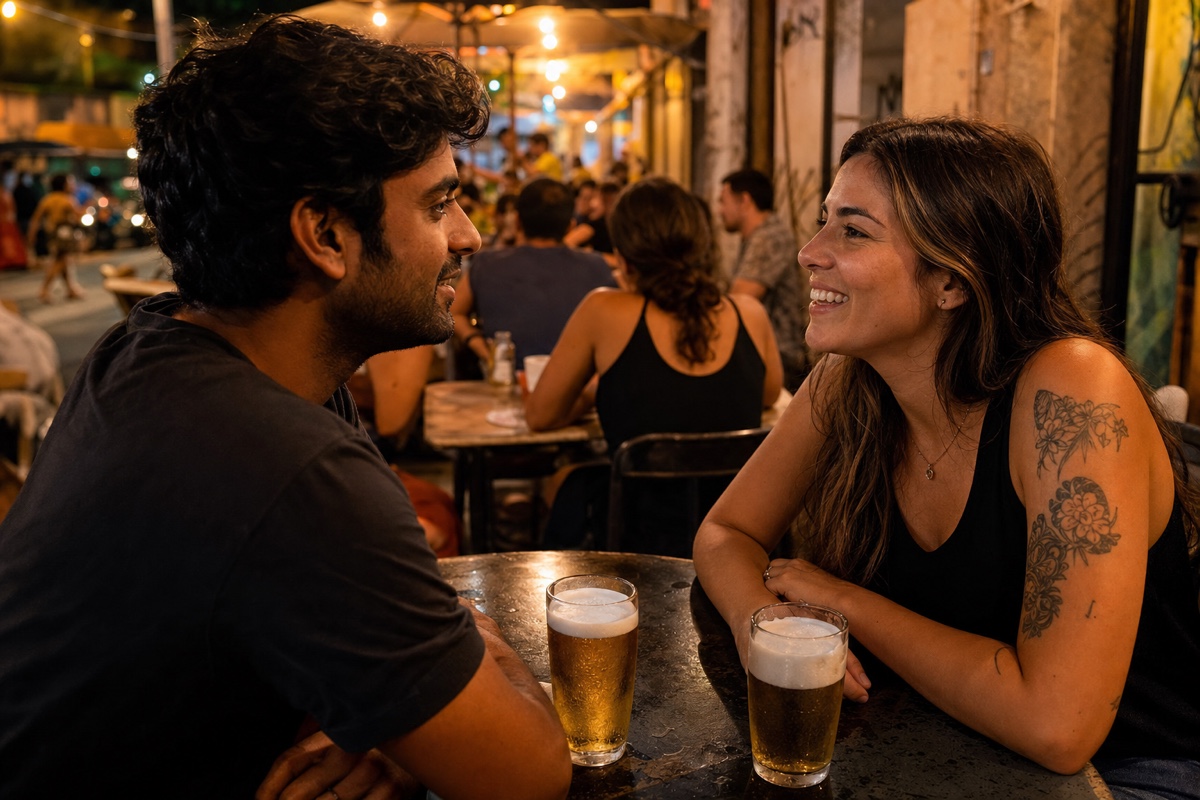
Class is always somewhere in the room, and it’s worth understanding because Brazil is one of the most unequal countries in the region and people clock the signals of it quickly. Trying to perform money you don’t have travels worse than simply not having it. The good news for your wallet is that the best dates here are cheap by design: a round of ice-cold “chope” (draft beer) and a plate of “petiscos” (bar snacks) at a sidewalk boteco runs a fraction of a formal dinner, and it’s where a lot of couples genuinely start. Save the pricey rooftop in São Paulo or Rio for when there’s a reason to.

Why dating in Brazil starts with “ficar”
Here’s the word that reorganizes everything. “Ficar” literally means “to stay,” and to ficar with someone is to kiss them, spend the night, maybe do it again next weekend, all with no label and no promise of tomorrow. The person you’re doing that with is your “ficante.” It might be one night at a party. It might run loosely for a month. Nobody owes anybody a definition.
At a party or a balada (a club or late-night bar) kissing is casual and public, and there’s even a word for the open making-out you’ll see on a crowded floor: “pegação.” A friend kissing two different people across one night raises no eyebrows, at least not in the big cities. The double standard hasn’t vanished, so women tend to get judged more for the same behavior, more so in smaller towns and religious families, and how discreet people keep it varies with that. But casual is the normal way in, not the exception. The classic gringo mistake is treating a ficante like a girlfriend after two good nights. In Brazil those are genuinely different things, and jumping the gap uninvited reads as intense, not romantic.

The words that make it serious: “quer namorar comigo?”
Turning a ficante into something official has its own moment, and it’s spoken out loud. Someone has to “pedir em namoro,” literally ask the other person to be their namorado or namorada, and until that conversation happens you are not exclusive and shouldn’t assume you are. It can be as plain as a direct question on the walk home, but it’s a real line people cross on purpose, not a mood you drift into. Once you’re “namorando,” things move: you’ll get folded into the weekend “churrasco” (barbecue) where the family gathers, and meeting everyone tends to happen sooner than foreigners expect. Our guide to Brazilian dating culture explains why that private invitation can carry more weight than public affection.
From there, plenty of couples are in no rush to marry. Many move in together under “união estável,” a legally recognized stable-union status, and live essentially married for years without a wedding. Religion sets the tempo more than anything else does: relaxed and secular among young city dwellers, more deliberate in evangelical and Catholic families and out in the interior, where the ficar-first script gets quieter and courtship looks more old-fashioned. Wherever the person across from you sits, the same rule applies that the “não é não” campaign spells out: a clear no is respected, said and heard plainly, and the best thing a foreigner can do is be just as direct back.
So learn both questions. “Quer ficar comigo?” and, when the time actually comes, “quer namorar comigo?” Knowing the difference between those two, and when each one is the right thing to ask, is most of dating in Brazil.