Dating a Mexican woman means figuring out which of two rulebooks she is playing by, because most women there carry both. One is the old one: the man courts, the man pays, the family is sacred, and a woman guards her reputation. The other is newer and louder, written by the most vocal feminist generation Mexico has ever had, and it throws a lot of the first book out. A given woman keeps some pages from each, and which ones is rarely obvious on date one. Read that mix right and you understand her. Miss it and you will either come off as a pushover or as exactly the kind of man her generation is marching against.
Gringo, by the way, just means foreigner in Mexico, usually an American, and it is not really an insult. This is a foreigner’s guide, so it assumes you are the outsider trying to date a mexicana (a Mexican woman) on her home ground.

Why dating a Mexican woman means learning two rulebooks
To understand the woman in front of you, understand the two forces that raised her. The old script is built on machismo and its quieter twin, marianismo. Machismo is the familiar part: the man as provider, protector, the one who makes the first move and pays the bill. Marianismo is the expectation aimed at women, modeled loosely on the Virgin of Guadalupe, that a good woman is devoted, family-first, morally above reproach, and long-suffering. Catholicism sits underneath all of it. This is where the “caballero” (gentleman) rituals come from: the man opens the car door, walks on the street side of the sidewalk, insists on paying, and pursues openly rather than waiting to be chosen.
Then there is the new script. Over the last several years Mexico has seen enormous feminist mobilization, most visibly on March 8th each year, when tens of thousands of women fill the streets of Mexico City and other cities to protest gender violence and the country’s femicide crisis. A generation of younger women has grown up openly rejecting machismo, naming things their mothers were told to tolerate, and treating the old “piropo” (a compliment shouted at a woman on the street) as harassment rather than flattery. This is not a fringe. It is mainstream among educated, urban, twenty- and thirty-something women, which is exactly who a foreigner tends to meet.
So the same woman might want you to plan the date and pick her up like a caballero, and also split the bill and bristle if you imply she should be domestic. None of that is contradiction. It is a person choosing from two rulebooks in real time. Your job is to notice which page she is on, not to assume the whole country runs one way.

Her family is Catholic, close, and part of the package
Family in Mexico is not a later chapter of the relationship. It is present almost from the start. Many adults, women included, live with their parents until they marry, partly because rent is high and partly because leaving early is simply not the expectation. That means her parents’ read on you matters early, and her mother’s especially. In a culture shaped by marianismo, the mother is often the emotional center of the household, and “la suegra” (the mother-in-law, or a girlfriend’s mother) is a figure with real influence, not a punchline.
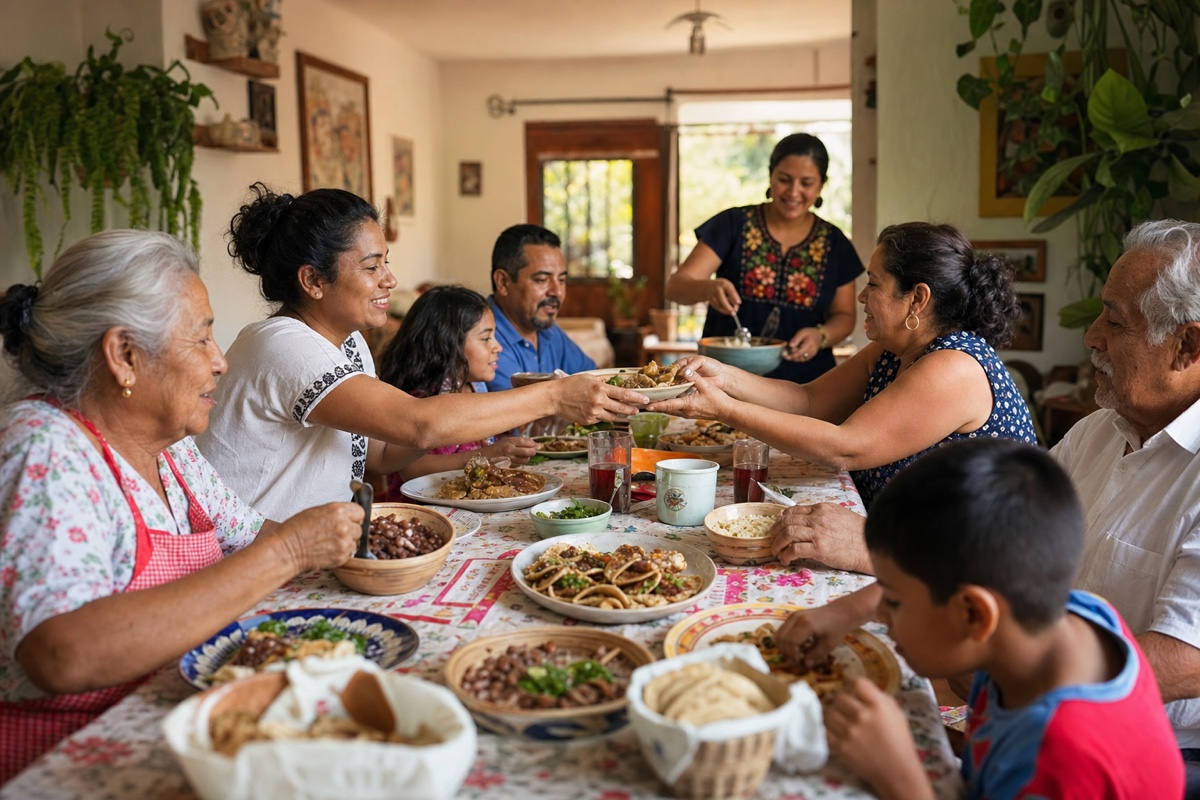
The moment things are getting serious usually arrives as an invitation to “la comida,” the big family meal in the mid-afternoon, most often on a Sunday. Note that this is comida, the main midday meal around two or three o’clock, not a quick lunch and not the Colombian “almuerzo.” A Sunday comida with her parents, grandparents, and a rotating cast of tíos and primos (uncles and cousins) is the real milestone. Show up, eat what you are served, greet the grandmother properly, and answer the questions about what you actually want, because they will ask, warmly and directly.
How marriage-minded she is depends heavily on that two-scripts split. Plenty of women, especially outside the big urban feminist bubbles, still see dating as a path toward marriage and children, and Catholicism keeps that current strong. Others, particularly in Mexico City, are in no hurry and would be offended by the assumption that a wedding is the goal. Do not guess. Ask her what she is looking for before you are three months deep, because the mismatch between “just seeing where this goes” and “building a family” is the one that quietly wrecks the most of these relationships.
From “el free” to novios: the whole range of what she might want
Casual dating is alive and well in Mexico, and it has its own vocabulary. “El free” is the everyday slang for a no-strings arrangement, a person you see and sleep with but are not committed to (“es mi free,” he or she is my free). “Amigovios,” a mash-up of “amigos” and “novios,” is roughly friends with benefits. And when two people are in that early, unofficial phase of going out, Mexicans say they “andan” together, from “andar con alguien,” to be involved with someone without it being official yet. App-era flings and casual scenes are as normal here as anywhere, especially among younger people in the cities.
Here is the honest part, and it is where the old script still bites. The double standard is real. A man being casual is barely remarked on. A woman doing the exact same thing risks being judged for it, by acquaintances and sometimes by her own family, in a culture that historically prized female purity. This is precisely the machismo the feminist generation is done tolerating, but “done tolerating it” and “it has vanished” are not the same thing. So a woman who keeps a casual relationship discreet is usually protecting herself from that judgment, not hiding you. Respect the discretion.
When it turns official, there is a real line to cross. You go from andar (unofficial, seeing each other) to being “novios” (committed boyfriend and girlfriend), and becoming novios is typically an actual conversation, someone asking, rather than a label you drift into. After that, for the more traditional-leaning, the expected arc bends toward living together or marriage. The point is not to memorize a ladder. It is to know that “casual” and “serious” are marked stages here with names, and to find out which one she thinks you are in.

Being the gringo: how you are read, and where you meet her
As a foreign man you show up pre-cast, and the casting is not always flattering. To some women you are the telenovela fantasy, the novelty who is only in town for a good time and will be gone by month’s end. That assumption is not paranoia on her part, it is pattern recognition, because a lot of foreign men in Mexico really are just passing through. The way you clear it is unglamorous: learn real Spanish, stick around past a single trip, and be specific about your intentions. Running a whole relationship through her second language quietly flattens who she is, and the humor and warmth that make her herself mostly live in Spanish. On the bill, expect to cover the first date as the caballero move, and expect that many younger, more feminist-minded women will insist on splitting soon after (“vamos a la mitad,” let’s go halves). Let her set that pace rather than assuming either way.
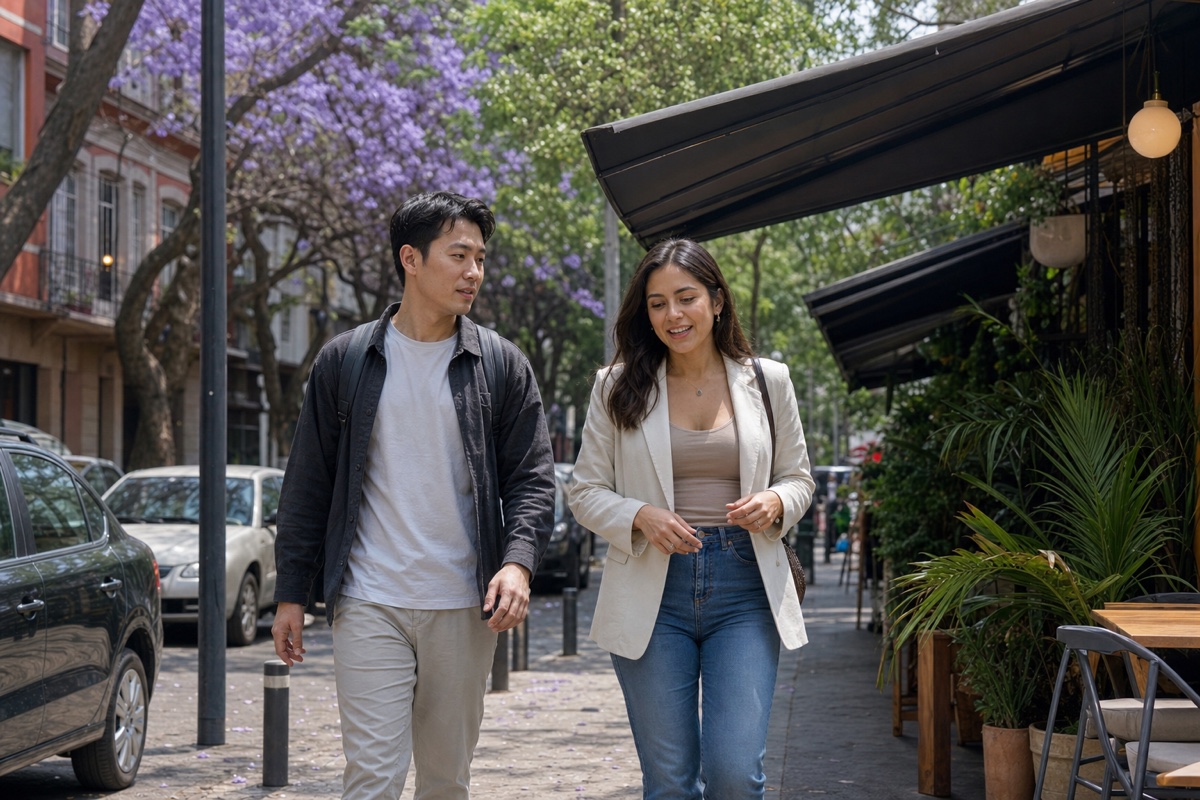
Where you meet her matters too. The gringo default is to land in Mexico City, post up in Roma Norte or Condesa, the leafy neighborhoods that became a digital-nomad hub after the remote-work wave, and try to date inside that bubble. It works about as well as dating other tourists usually does, and locals increasingly read those zones as gentrified expat territory. Everyday life still runs on introductions through friends, on nights out in mezcalerías and cantinas, on shared hobbies and the gym.
 Apps carry a big share of the meeting now, and they let you skip the tourist-bar filter. LatinFlare is built for exactly this: its Explore grid lets you browse and message real people directly, with filters including a local-or-foreign preference, Near shows who is around you right now, and Globalist lets you set your location to Mexico City or Guadalajara before you land so you arrive with conversations already going. For the wider lay of the land beyond meeting women specifically, our dating in Mexico guide covers the country as a whole.
One caution worth taking seriously. The U.S. Embassy has warned that criminals in Mexico have used dating apps to lure victims, including cases of kidnapping and extortion around Puerto Vallarta and the Guadalajara area. This is not a reason to avoid apps, it is a reason to date like an adult.
Get the reading right, learn enough Spanish to actually know her, and Mexico is one of the warmest and most fun places in the world to date. The two rulebooks are not a trap. They are just something you have to learn to read.