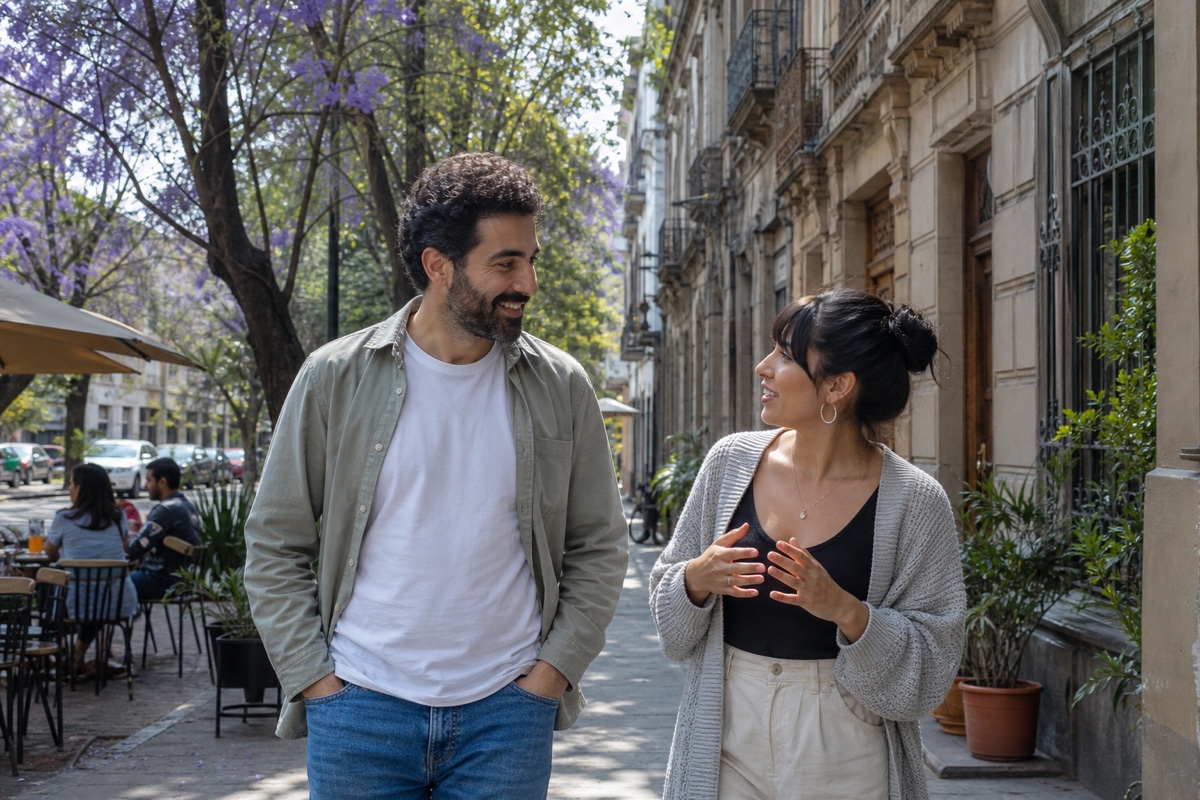
Mexico is the size of Western Europe, and dating in Mexico changes just as much from one part of it to another. What works on a rooftop in Roma Norte lands differently at a Sunday lunch in Guadalajara, and the version a spring-breaker meets in Cancún has almost nothing to do with how a 29-year-old designer in Mexico City actually dates. Most foreigners arrive running one of two scripts: Mexico as a nonstop party where everyone’s up for anything, or Mexico as deeply traditional, Catholic, and chaperoned. Both are decades out of date, and both get read the second you open your mouth.
So this guide skips the scripts. It starts with the thing outsiders misread first, how Mexicans actually signal yes and no, then the family you’ll feel in the background of everything, the full range from casual to marriage-minded, where people really meet, and what shifts when you’re the foreigner in the story.
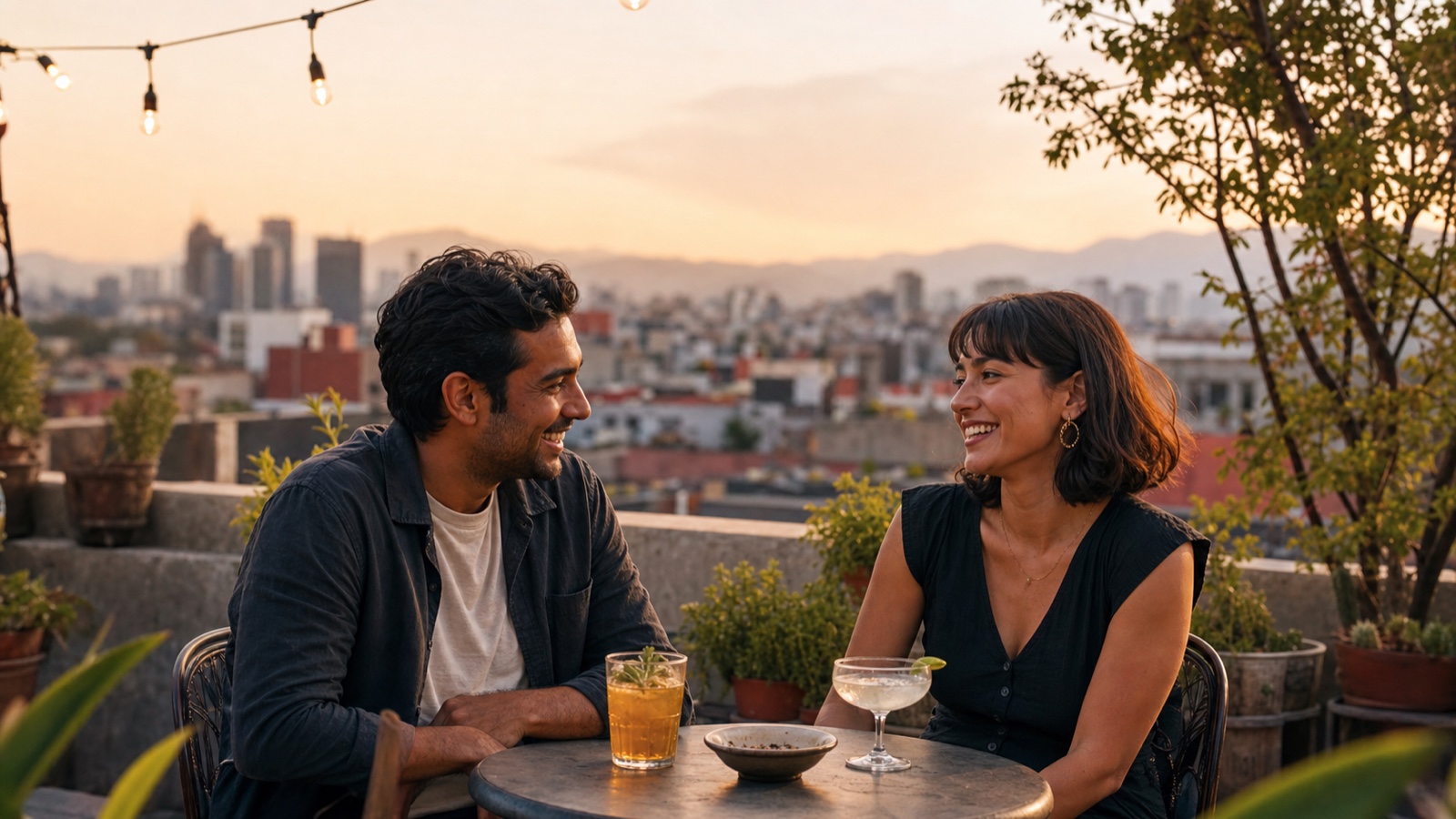
Reading interest when nobody says it straight
The thing that trips up newcomers most isn’t romantic at all, it’s a word. “Ahorita” is the little version of “ahora,” now, so it sounds like it should mean “right this second.” It means closer to the opposite: in a bit, later, at some point, maybe never. “Ahorita voy” can mean the person is walking out the door or has quietly decided not to come. Hear it as “not now” until context teaches you otherwise.
Behind that sits a bigger habit. Mexican communication runs indirect, and a flat “no” is treated as a little rude, so you get soft yeses that are really soft noes. “Sí, déjame ver” (yes, let me check) and “yo te aviso” (I’ll let you know) both often mean it isn’t happening. A real yes shows up with a detail attached: a day, a place, a “va” (deal, you’re on). Warmth is the baseline here and doesn’t single you out, so don’t read ordinary friendliness as a green light. Confirm the plan the same day, name an actual time and spot, and watch whether they add specifics or keep it vague. Rolling in twenty or thirty minutes late socially is normal and no insult; being an hour behind to a table you booked is a different thing.

Family enters early, and everyone’s watching
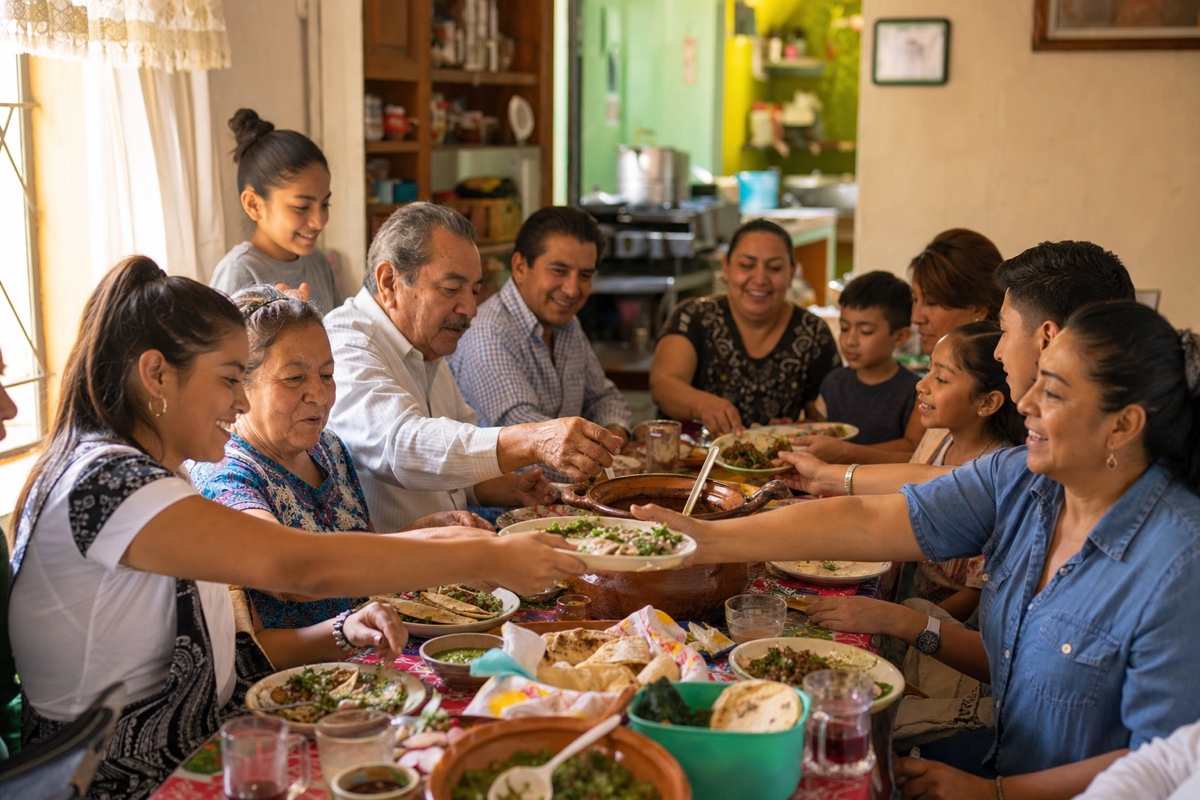
Family is the center of gravity in Mexican life, and it reaches dating sooner than most foreigners expect. The set piece is Sunday “comida,” the long midday meal that runs from around two into the late afternoon, where the extended family gathers and eats for hours. An invitation to that is not a casual drop-in. If someone brings you to the family table, they’re telling you this is going somewhere and letting everyone size you up at once. Come hungry, bring a small something, and expect real questions.
Class sits in the room too, and it’s not the same as money. “Fresa” means preppy and posh, thrown sometimes with affection and sometimes as an eye-roll; “naco” is its ugly opposite, a loaded, classist put-down for anything read as tacky or low-rent. Know both words and don’t go slinging the second one around. A family reads where you seem to fit on that map, and trying to buy your way up it reads worse than not having money at all. What actually travels well is being easy with everyone from the abuela to the kids, because a house that likes you matters more here than a good restaurant does.
Casual, “free,” exclusive, and marriage-minded
Mexico dates across the full range, and assuming everyone is either hooking up or hunting a spouse is the fastest way to misread the person across from you. Casual is common and, for women especially, kept discreet, because the double standard is alive: a man playing the field gets a shrug, a woman doing the same gets talked about, more so away from the big cosmopolitan crowds. Don’t expect a casual partner to broadcast it, and don’t out anyone by doing it for them. The vocabulary shows how normalized it is. Two people hooking up with no title are “free” (yes, the English word, used as a noun: “somos free”). “Amigovios” fuses “amigos” and “novios” for friends with benefits, and “ligar” is to flirt or pull. In the beach and tourist zones, Tulum, Playa del Carmen, and the Cancún strip, the scene tilts harder toward party and, in places, toward the transactional, so read those for what they are rather than as the national default.
The public rituals around serenatas, caballerosidad, and the first bill sit in our Mexican dating culture guide. This section stays with what each relationship label promises.
Then comes the undefined middle: “andar con alguien,” to be seeing someone, is the stretch before anyone commits to the word “novios,” and couples can idle there a while. Making it official with “novio” or “novia” is a real step people take early and mean, and the jump from a few dates to labels can happen in weeks. At the serious end, plenty of Mexicans date with marriage genuinely in mind and say so sooner than a foreigner expects, because wanting something lasting carries no stigma; in more traditional and religious families, “novios” is quietly understood as a road toward marriage rather than an open arrangement. On the bill, the old norm is that the man invites and pays, and on a first date that still reads as courtesy more than a down payment. Among under-35 professionals in Mexico City and Monterrey, splitting is increasingly normal, and a woman reaching for the check is just paying, not testing you. Machismo hasn’t vanished, but it’s uneven and generational, and it’s running into one of the most energetic feminist movements in the region; every March 8 huge marches fill the center of the capital, and possessiveness that might have slid a generation ago now gets someone dumped. Wherever you land on this range, match the other person’s honesty about what they want. For how that traditional-versus-modern split plays out one-on-one, our guide to dating a Mexican woman goes deeper.

How and where people actually meet
In the cities, apps run the show like almost everywhere else. Tinder and Bumble are familiar swipe options among urban Mexicans under 35, while Bumble’s Opening Moves gives a new match a profile question to answer. Being foreign gets you matches, for better and worse, which is its own section below. For a direct comparison of those match-first formats with LatinFlare’s open browsing, read our guide to the best dating apps in Mexico. If the capital is your base, our Mexico City dating guide turns its neighborhoods, travel time, and date options into a workable plan.
Offline still carries more weight than a lot of visitors expect. A big share of couples meet through a friend group, at a “reventón” (a house party that runs late), or at the cantina and mezcalería tables that fill up on Thursday nights. In Mexico City that scene concentrates in Roma Norte and Condesa, where the terraces blur the line between a bar and someone’s living room. Guadalajara’s Avenida Chapultepec does the same job, and in Monterrey it’s the Barrio Antiguo and the wealthier San Pedro side. In smaller cities and towns, the plaza on a weekend evening is still a real place to see and be seen, not a museum piece.
If you’d rather land with conversations already going, that’s where LatinFlare earns its place. Set your active location to Mexico City, Guadalajara, or Cancún before the trip with Globalist, see who’s actually online through Explore, and message without hitting a paywall, so you arrive with real plans instead of a cold app and a week to fill.
Dating in Mexico as a foreigner, and staying smart
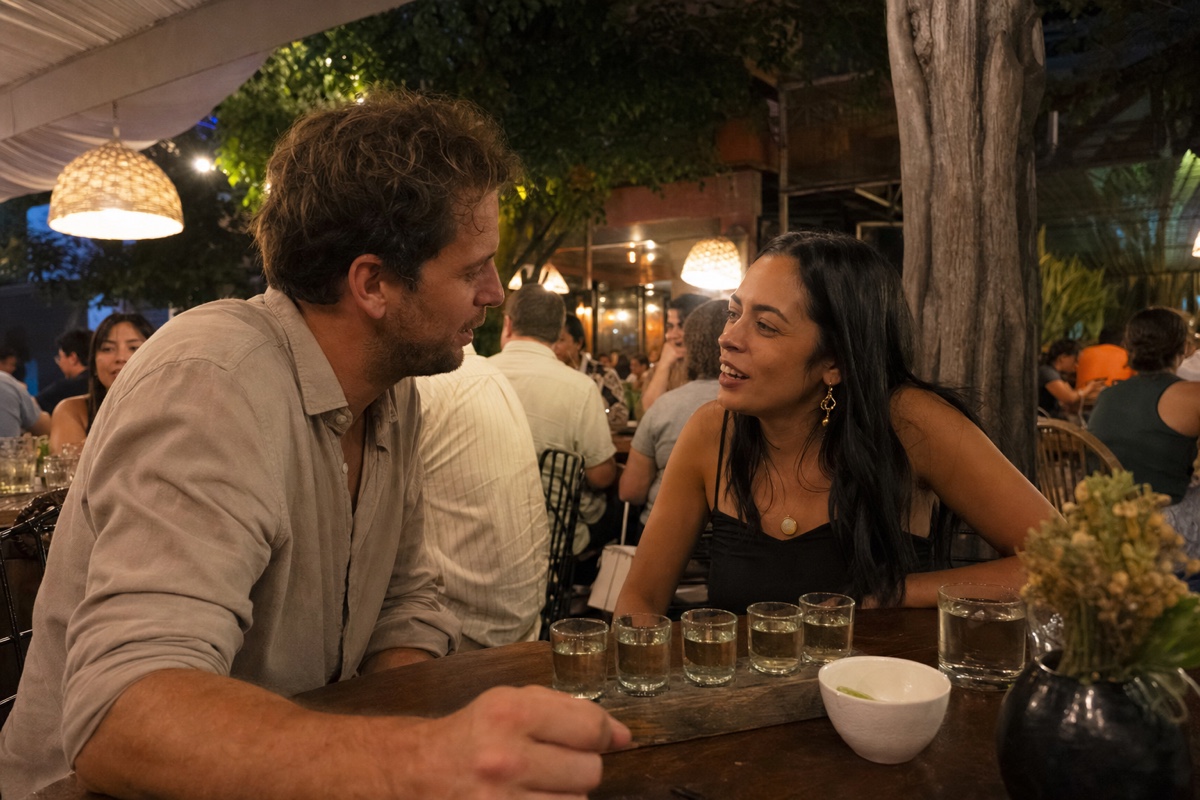
Being foreign gets you attention, and there’s even a Mexican word for the reflex some people have of favoring the foreign over the local: “malinchismo.” Plenty of Mexicans resent that reflex, so treat a match as an individual rather than assuming the novelty is doing the work. Since 2020, a wave of remote workers landed in Roma and Condesa, pushed up rents, and wore out some of the welcome; the “gringo, go home” stickers are real, and so is the frustration behind them. Don’t be the person who treats the city as a cheap playground and never learns the language. That points at the single biggest green flag available to you: Spanish. Many young, educated urbanites speak solid English, so you can get by, but effort in the language reads as respect in a way nothing else does. Mexico is one of the few Latin American countries, along with Colombia, with a genuinely active foreigner-dating scene, which also means locals have met the type before.
Safety belongs right here, because the risks that touch a date are not the cartel headlines. Those are geographically concentrated and, for the most part, have nothing to do with dating in Mexico City, Guadalajara, the good parts of Monterrey, or a calm city like Mérida. What you actually plan around is ordinary and urban: petty robbery, “secuestro exprés” (express kidnapping, where someone is briefly forced to pull cash from ATMs), and dodgy taxis. Use Uber or DiDi rather than a cab hailed off the street, meet somewhere public in daylight the first time, keep your phone and cash low-key, tell a friend where you’ll be, and watch your own drink. Romance scams run here like everywhere, so stay a little skeptical of a match who turns intensely devoted fast and then floats a money problem.
One more thing, said plainly because it shapes how you show up: gender violence is a real and serious issue here, which is part of why a woman may want to meet somewhere public, share your details with a friend, or take things slowly. Read that as basic sense, not distrust of you, and be the person who makes a date feel safe. Respect a no the first time it’s said. Do that, learn to hear “ahorita” for what it means, and Mexico opens up fast.