Costa Rica is really two dating cultures stitched into one country, and which one you land in depends almost entirely on where you are standing. In Tamarindo or Santa Teresa it is fast, transient, and half foreign. Forty minutes inland in the Central Valley, where most ticos actually live, it is slower, family-centered, and looks nothing like the beach-bar version. Dating in Costa Rica goes sideways when you assume the country runs on one set of rules. It runs on two.
So this guide skips the pura vida postcard. It starts with how that famous laid-back pace actually shapes flirting, then what changes the moment you get read as a tourist, how things work once a tica gets serious about you, and finally what a real date looks like and what it costs. Ticos, by the way, is just what Costa Ricans call themselves. A tica is a Costa Rican woman.

Pura vida is a pace, not just a bumper sticker
“Pura vida” translates literally to pure life, and Costa Ricans use it for hello, goodbye, thanks, and “all good.” Underneath the phrase is a real preference for low stress and no rush, and that preference sets the tempo of dating too. Courtship here is rarely aggressive. Texting is unhurried, plans firm up late, and someone who seems keen may still take three days to answer. Running behind is so normal it has a name, “hora tica,” tico time, and a 7:00 plan landing at 7:40 is not an insult.
The trickier part is the flip side of all that easygoing warmth. Ticos place a high value on “quedar bien,” staying on good terms and keeping everyone comfortable, which means they will go a long way to avoid a blunt no. A tica who is not interested rarely says so outright. She keeps replying, stays friendly, and simply never lands on a real plan. Read that correctly and you save yourself weeks.

You get read as a tourist first, and it cuts both ways
In Costa Rica “gringo” just means foreigner. It carries no real sting and lands on pretty much anyone who is not tico. What does carry weight is the default assumption attached to you in a beach town: that you are on a two-week clock. The whole coast is built around visitors who leave, so the honest first read of a foreign man in Tamarindo, Jacó, Santa Teresa, Nosara, or Puerto Viejo is vacation fling, not future husband.
That is not a complaint, it is just the water you are swimming in, and the beach scene runs on it. It is seasonal and transient by design. High season from December through April packs the bars, the green (rainy) season empties them, and the dating pool rotates every few weeks as flights come and go. Casual is the default, and everyone involved knows the terms. The one thing worth naming plainly: the double standard is real. A traveling foreigner is expected to be casual and nobody blinks, while a local tica doing the exact same thing gets talked about in a town where everyone knows her cousin. Discretion is not old-fashioned here, it is practical.
There is a second surprise waiting in those same towns. Costa Rica pulls one of the largest expat and digital-nomad crowds in the region, helped along by a dedicated nomad visa that asks for proof of foreign income. So in the surf towns you will match as many foreign women as ticas, and the “dating a Costa Rican” idea often turns into dating other expats you met on the same beach. That is worth knowing before you build a whole trip around it.
LatinFlare is built for exactly this gap. Its Globalist feature lets you switch your active location to San José or Guanacaste before you fly, so you have conversations going before you land instead of starting cold in a bar, and Explore and Near let you meet people well outside the transient nightlife. Costa Rica is one of the few Latin American markets where foreigners genuinely factor into the local dating scene, alongside Colombia, Mexico, and Brazil. On safety, Costa Rica is one of the more stable and easygoing countries in the region, and it famously abolished its army back in 1948, but tourist zones still see the usual petty theft and inflated “gringo” prices, so keep first dates public and your phone close.
For the tool choice itself, compare Costa Rica dating sites by city life, stay length, and beach trip.
If your question is about one-to-one signals rather than the wider scene, read our guide to dating Costa Rican women with respect.

Getting serious with a tica means getting a family
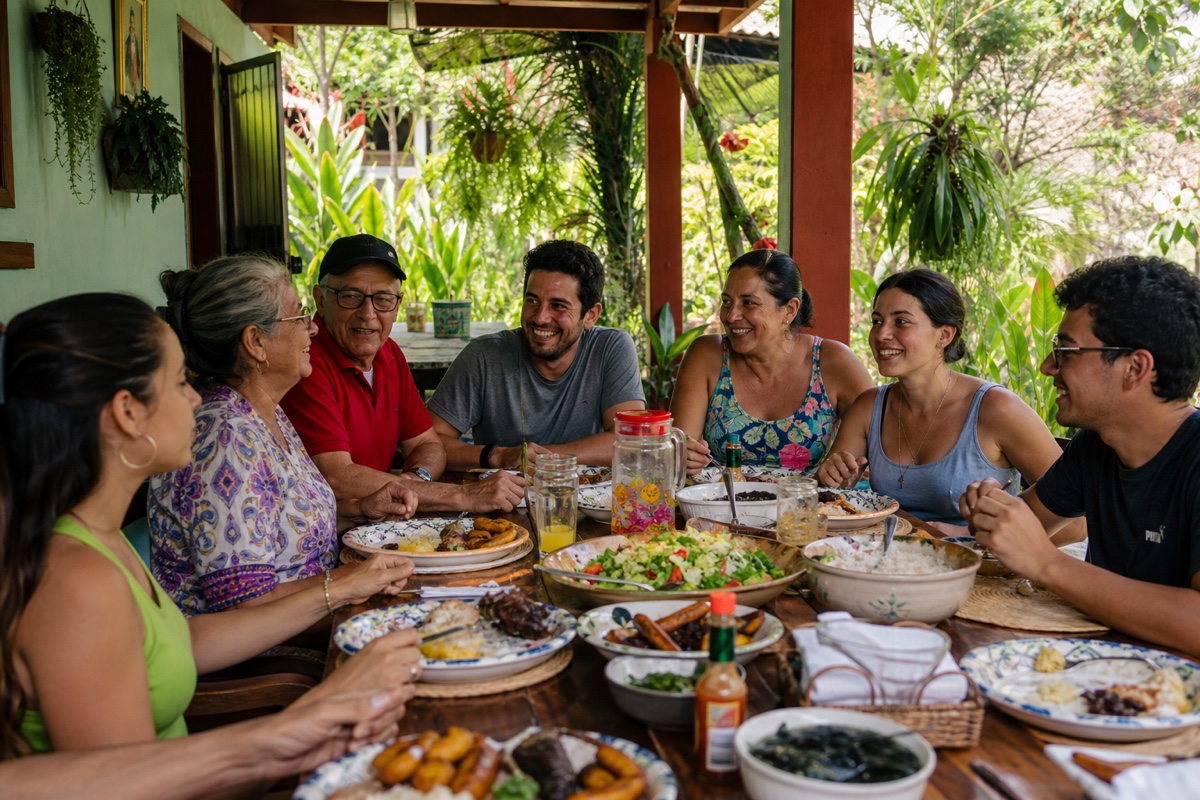
Leave the coast and the rules change. In San José and the surrounding Central Valley towns like Escazú, Heredia, and Alajuela, dating is intent-driven, and family sits at the center of it in a way beach-town flings never touch. Many adults live with their parents well into their late twenties or until they marry, partly because housing is expensive and partly because families here stay close by choice. That means her family is not a distant milestone you reach after a year. You meet them early, and their read on you matters.
The clearest sign things are getting real is the invitation to Sunday lunch, the “almuerzo” with her parents and usually a few siblings, aunts, and cousins. That meal is the milestone, more so than any formal exclusivity talk. There is also a defined step in the language: you move from “saliendo” (going out, still casual) to “novios,” which means boyfriend and girlfriend as a genuine commitment, and asking to be novios is a real question with a real answer. Costa Rica leans Catholic and traditional under the surface, though ticas today are educated, working, and in no hurry, so the old machismo is softer here than in much of the region.
If you are foreign and you actually want something serious, the thing that shifts the read is showing you are not just passing through. Learning real Spanish rather than beach Spanish, staying longer than a season, and treating her family as people to win over rather than obstacles will move you further than anything you say to her directly.
What a date actually looks like, and what it costs
Costa Rica is the most expensive country in Central America, and the coast makes that gap wider: towns like Tamarindo and Nosara run roughly 40 to 80 percent higher than the Central Valley on rent, food, and anything aimed at tourists. None of that means a good date has to be pricey, and here the cheap option is usually the better one anyway.
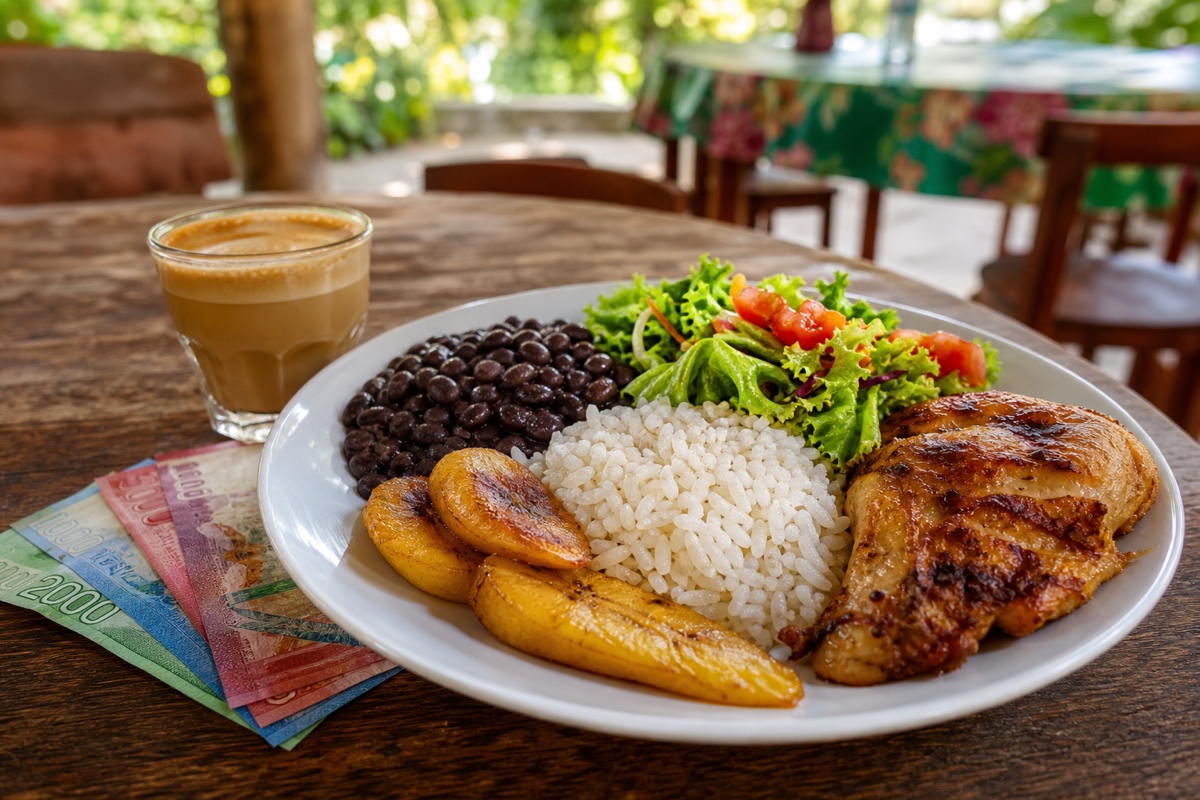
Skip the resort restaurant. A first date built around a “soda,” the small family-run eateries that serve the national plate, the “casado” (rice, beans, plantain, salad, and a protein), lands you a full meal for roughly 3,500 to 4,500 colones, about six to eight US dollars, and it reads as relaxed rather than trying too hard. A café cortado runs around 1,500 colones. The genuinely great first dates lean on what the country is actually good at: a morning at the beach, a hike to a “catarata” (waterfall), a coffee finca tour up in the hills, or a day at a national park like Manuel Antonio, which charges a modest entry fee. On who pays, a foreign man is often expected to offer on the first date, but splitting is increasingly normal among younger ticos in the city, so read the moment rather than assuming. One practical note: carry cash in the beach and rural spots, where small sodas and sabaneros do not always take cards, while the Central Valley is comfortably card-friendly.
Pick the beach day over the fancy dinner. It costs less, it fits the pura vida the whole country is built around, and it tells you inside a few hours whether hora tica and a slower pace read as charming or maddening to you. In Costa Rica, that is the real compatibility test.